Introducing Podstudio: The Teleprompter That Listens
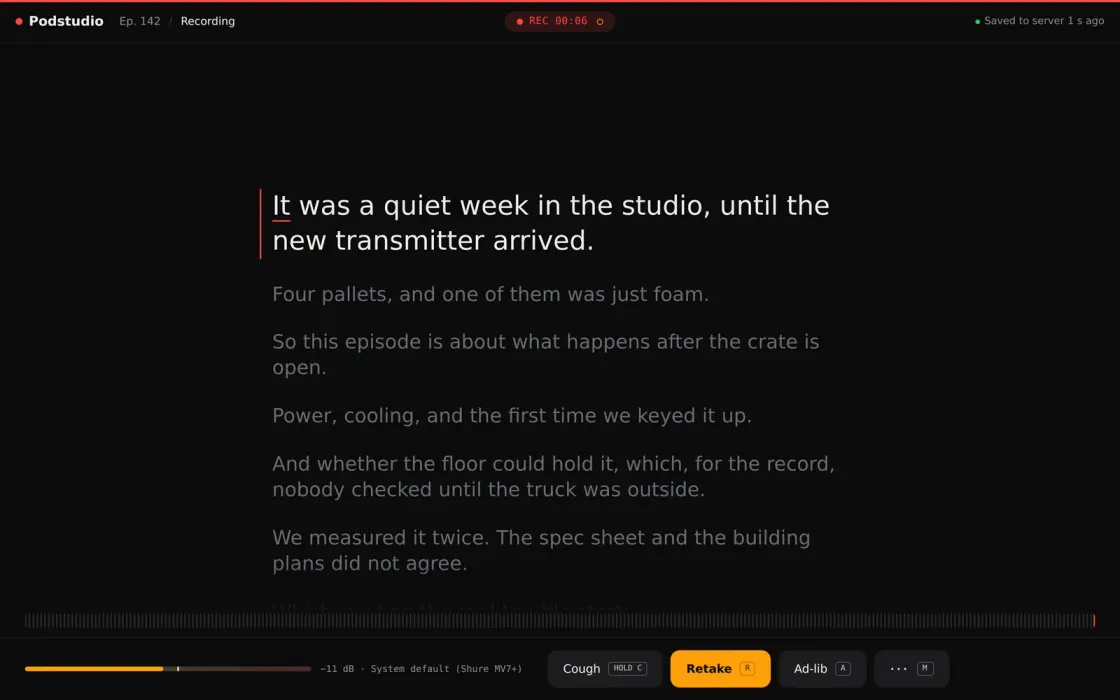
I'm building Podstudio, a free, open-source podcast studio that runs in your browser. The script scrolls as you speak, and it records lossless WAV on your own server.

Update, October 25, 2026: Since I wrote this, I’ve rebuilt Podstudio around recording and publishing first. The voice-follow teleprompter isn’t in the current build, but it’s coming. The hotkey pads may come back too, and guest recording isn’t built yet. What works today is solo recording that doesn’t lose audio, an RSS feed, and a public show site that runs on your own server. Recording has only been tested with a simulated microphone so far, not on real audio hardware. The Podstudio page has what works now and what doesn’t yet.
I’ve been working on something I’m really excited about: Podstudio, the teleprompter that listens.
Solving my own problem
Podstudio started because I wanted one simple web app where I could do all of my recording in one place, with a script that actually keeps up with me.
I’m AuDHD, and staying on point is hard for me. I’ll start a thought, chase a tangent, and suddenly I’ve lost my place in the script. A regular teleprompter doesn’t help much, because it scrolls at its own pace, not mine. I wanted one that follows along as I talk and waits for me when I wander off.
Right now my process is spread across a bunch of tools. I record, then upload the audio to another project of mine, Podscriber, which gives me a starting point for the description, titles and drafts of social posts. Before any of that, though, the audio needs cleaning up. I record in a noisy, untreated basement, so I’d normally reach for plugins like Scheps Omni Channel 2 and Waves NS1 just to get something listenable.
That’s a lot of steps when all I want is to sit down and record an episode with minimal production effort. So I’m trying to build all of it into one spot.
I’m also taking a page from my radio automation days. On air, everything you might need is on a hotkey: sound effects, music beds, clips, liners. Podstudio brings that back, so a sound is one keypress away instead of a trip through another app.
What it does
- A prompter that follows you. Voice follow scrolls the script as you talk, and holds your place when you go off script.
- Lossless recording. Mono or stereo WAV at 16 or 24-bit, saved every five seconds and sent to your server as you record.
- Marked, not cut. Retake, cough and ad-lib are one key each. The raw file stays whole, and the export adds an edit with your last take of each line.
- A guest and a producer. A six-digit code and a waiting room. Your guest records on their own device while you talk on your usual call.
- Hotkey pads. Nine sounds on the number keys, ducked under your voice and saved as their own track.
- Yours to run. One small server with two-factor sign-in, a guided installer and no subscription. MIT licensed.
Where it stands
Podstudio isn’t released yet. Recording, voice follow, guests and exports work today, and the first test on a real server is under way. Expect rough edges until the first release. Next up are versioned releases, transcripts and a mixer on a phone.
You can read more about Podstudio here, or follow along on GitHub. Watch or star the repository to see new versions as they land.