
EP 16: BROADCAST NETWORK SECURITY AFTER THE FCC ROUTER BAN
DESCRIPTION
"The FCC put foreign-manufactured consumer routers on the covered list, and if your facility is running one of those boxes in a mission-critical spot, it's time for a hard look at the rack. I break down what the new rules actually say, what's still unclear for brands that design in the US but build overseas, and why the real risk isn't the policy. It's what happens when that budget router dies during morning drive with no backup plan.
Then real alternatives that don't need enterprise budgets: pfSense and OPNsense handle VPN tunnels, VLANs, intrusion detection, and full firewall management on hardware you might already own. I share firsthand experience running pfSense on a repurposed Dell desktop across multiple sites, why a known-good backup router matters, and how WireGuard has become serious remote access. If open source support isn't in-house, a local MSP can wrap a contract around it for less than most big vendor solutions.
Also in this episode: a local ownership win in Brookings, South Dakota, where the people running the stations are buying them. A rough FCC inspection story out of New Jersey with tower lights, blocked access, wrong power, and EAS gear that wouldn't turn on. The FCC's HD Radio digital power changes allowing asymmetric sidebands up to minus 10 dBc on eligible FMs at 106.9 and below. And the C band squeeze, with legislation pushing an auction by mid-2027 while rural stations still relying on C band often don't have the fiber options to transition smoothly."
TRANSCRIPT — EP 16
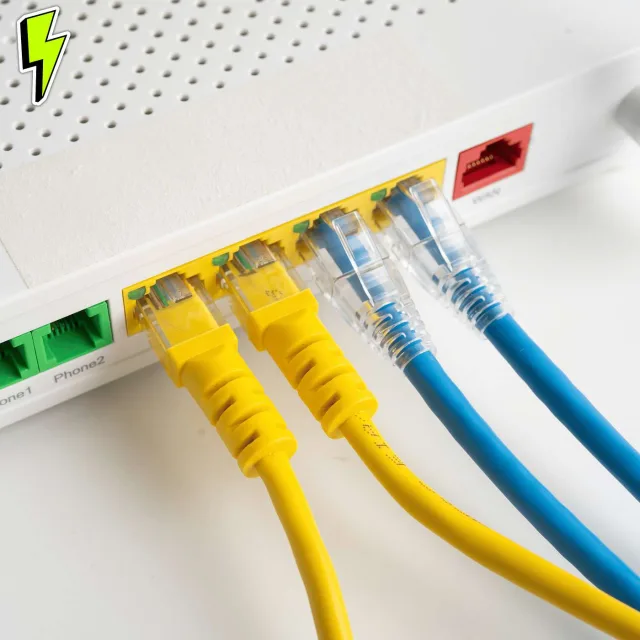
The FCC just banned consumer -grade routers. Not just the cheap, sketchy ones you find on Amazon. Not just the brand that's been in the news for all the wrong reasons. New consumer -grade routers manufactured outside of the United States. Which, if you've looked on the back of any of them, it's pretty much all of them. And if you're running a broadcast facility and you've got one of those little TP links or a net gate doing something really important somewhere in the building, I'd probably pay attention to this one. This is the Tyler Woodward project. Today I'm talking about the router band and what you can do about it. A local ownership win out of South Dakota. A New Jersey AM station getting
a very uncomfortable letter from the FCC. the HD radio digital power changes that are worth knowing about, and why the C -band situation is going to hurt a lot of stations a lot more than others. We've got a full plate. Let's get into it. OK, so the FCC added consumer -grade foreign -manufactured routers to what's called the quote -unquote covered list. That's their running list of telecom equipment that's been flagged as a national security risk. Their reasoning is that foreign adversaries have been using compromised
consumer routers as a way into US networks. And the FCC decided the right move was to cut off the supply of any new equipment. Existing gear that's in your rack If it's already in your rack, it's already in your building, it's not going to go anywhere. Your grandfather did, but new models where any significant part of the production process happened outside of the United States, it now needs government approval before they can be sold here. That part, it's still a little murky to me because brands like, you know, Ubiquiti in Cisco, They're American companies, but they
manufacture overseas. So does this catch them in this mess too? Honestly, that's still getting sorted out. Manufacturers are trying to figure out their path forward. And the fine print is still being read by a lot of lawyers right now, which is kind of the standard for this sort of thing. If your station is running on proper enterprise gear, you know, think Fortinet, Juniper, Palo Alto, whatever your IT team chose when someone had an actual budget, you're probably okay. That sort of stuff isn't what this band is aimed at anyways. But if you're a smaller station, or
even a medium market station that's been patching things together for years because the budget never quite lined up with the need, This is the moment to look at what you've actually got going and decide if it's something you want to keep depending on. Here's the thing, there are real options that don't cost a ton of money. At my last gig, we ran PF Sense on an old Dell desktop, just a regular old PC with a decent Intel card. We had five open VPN tunnels on it. I think somewhere up to 13 VLANs snort running for Intrusion detection
we had the DHCP DNS all the all the spiffy features turned on off a ton of firewall rules a lot of netting rules You know and as I mentioned it was all open VPN too because wire guard really wasn't a thing yet I mean it was kind of on the radar, but wasn't matured like it is now And if you've got the option for a wire guard, wire guard is now very much a thing, and it's pretty good. I use it personally. And if you got the option at your station, I'd use that for your remote staff. It's pretty rock solid. And speaking of rock solid, PF Sense itself was rock solid. Now, when we eventually had the budget to get a NetGate appliance, which is all it really is,
is a purpose built piece of equipment an actual I guess it's sort of enterprise router level that came with PFSense Plus on it and had actual support behind it we still kept the old Dell around because it was still solid it was just on the older side and you know it needed to be phased out but we kept it as a backup because the thing still ran and if something goes wrong at midnight and you need to swap in a known good router The ugly old box suddenly becomes the most important thing in that building. Another option you can look at is OpenSense. It's a fork of PF Sense. Same general ideas, same packages,
same features. But, in my opinion, the UI is a lot easier on the eyes. And there's none of the weirdness around PF Sense Plus versus the free Community Edition. With OpenSense, you're not wondering what's behind the paywall. It's all there for the taking. You can turn whatever options on and off you want, install whatever packages you want, within reason. You don't want to overload the thing. And if you've got a smaller site or a simpler type of deployment, think of a remote site, a transmitter shack, something that just needs basic routing, Maybe a Wi -Fi access point open WRT on a Raspberry Pi can absolutely
do the job Not everything needs to be a big old project and my my honest opinion all of this is the one thing you got to watch out for is You own it. There's no support when something breaks at a bad time probably during the morning show that's on you or whoever you may have on your staff that handles the networking, which is honestly probably you too. So if your team isn't in a place to support that, look into a local MSP, a managed service provider who can wrap a support contract around open source software or open source infrastructure for probably a
lot less than a big vendor wants anyways. It's an option. The point isn't to try to do everything yourself. The point is to stay on the air. But also, I want to let you know, you got options. There's plenty of stuff out there. All right, this story is a good one. Connoisseur Media, they picked up a big chunk of Alpha media stations last year. They're selling their cluster in Brookings, South Dakota to the people who have actually been running the stations. 5 stations in particular. KBRK, KBRK -FM, KDBX -FM, KJJQ, and KKQQ -FM,
I think. The buyer is Cammie Powers, the market manager who's been running the place, along with her husband Derek and the business manager Chad Hoge. They're calling the new company Brookings Radio LLC. I love this. Because this is how it should work. Local people buying a local cluster. They know because they've worked there. Not another big media conglomerate. Sorry, I heart, I'm talking about you. Not another company with, you know, trying to squeeze out every little less cent out of the name or out of the place that they can. It's actual human beings who know the market. They know the advertisers. They know what the
community cares about. Connoisseur said Brookings didn't fit where they wanted to go after the Alpha deal. And that's fine. That's totally cool. When big groups sell off smaller markets, this is the best possible outcome. The stations land with people who actually give a damn. FCC approval, it's pending. and hopefully, you know, they hope to close sometime early summer. All I gotta say is good luck to Cammie and her team. I'm rooting for them, man. All right. Now we gotta go from the feel good story to, well, feel uncomfortable
story. Radio World covered a story about WIMG, an AM station in Ewing, New Jersey, that got inspected by the FCC and came away with a notice of violation. And the list of findings is one of those things that you read and think, how the heck did it get to that point? And honestly, we probably know. You'll understand what I mean when I rattle off what happened. Tower lighting was at the wrong heights. Obstruction lights weren't working. The licensee had filed a notum with the FAA for the outage, but they never renewed
it. And the FCC agent actually had to do it during the inspection. Brush and vegetation around the towers were thick enough to block access to the tower bases. The station was running at 900 watts daytime instead of its authorized 3200 watts. And the real troubling thing is the EAS equipment, it wouldn't even turn on. That's a lot of things to have wrong at the same time. And I want to be clear. I'm not sharing this to pile on to the station. They're already having a really rough day. I'm sharing it because a lot of us broadcast engineers know exactly how this happens. It doesn't happen because people are being lazy
or don't care, it happens because resources are getting stretched. One engineer probably covering too many sites, one owner trying to keep the lights on financially while the lights on the tower start to slip. Parts are on order, it's on the list, it'll get done after the next thing. And the next thing never comes. And then one day the FCC shows up. AM directional arrays are especially unforgiving here. You've got lighting requirements. You've got access requirements. You've got operating parameters that are not suggestions. And the EAS stuff, that's not optional.
And the FCC, to their credit, does still show up and look at this stuff in the field. So the takeaway, it's not complicated. Go walk the site. Check the lights. Make sure the EAS box actually does what it's supposed to do. Look at the logs. Make sure you're running those required weekly tests. Make sure you're relaying the required monthly tests. Confirm you're also running at the right power. Clear the brush. Hire a company if you have to. Do the boring stuff before it becomes a federal violation because once the feds are involved the boring stuff is now very expensive boring stuff all right let me tell
you about a rule change that doesn't get enough attention right now the fcc updated the rules for hd radio digital power and it's genuinely useful and good news for fm engineers the big thing is asymmetric sidebands your hd signal has two digital sidebands, one above your carrier, one below your carrier. Before this rule change, if a neighboring station needed protection on one side of you, you had to pull both sides down to match. Now, you can run each sideband at a different power level. Protect where you need to protect, push further where you have the room. More coverage, more flexibility, less compromise.
The FCC also made it a lot easier to run your digital power up to 10 % of your analog power. Minus 10 dBc. That used to need special authorization or an STA. Now it's just a notification. File 2100, schedule 335 -FM. And you're eligible. You're running. Assuming the FCC doesn't push back, which at minus 10 dBc, they probably won't. One catch though, right now this supplies to stations at 106 .9 MHz and below. If you're at
107 .1 or higher, you're still under the old framework because of concerns about interference near the air band at 108. The NAB is working on that and it sounds like the rules could expand within the next year or so. But if you're already on HD radio and you qualify, this is worth a conversation with your consultant engineer. One form, potentially meaningful, better digital coverage. That's a pretty good deal, right? And this brings me to our last story, Bob Weller. at the NAB who had a really good piece in radio
world that I think is required reading if you're a broadcast engineer paying attention to where the infrastructure of broadcasting is heading. The C -band situation. Yeah, it's real. There's legislation now. The one big beautiful bill. It required the FCC to auction off at least 100 megahertz of C -band spectrum by mid Weller isn't being subtle about it either. If you're still dependent on C -band satellite for distribution, you need to be working on transitioning. Not thinking about it, actively working on it. Now,
the counter -argument people make is that IP delivery is better than it's ever been. Sure, and that's true. Fiber infrastructure is better. Redundant IP paths are more accessible. Managed IP distribution has matured a lot for a station and a decent sized market with good carrier options. Migrating off a C -band and onto fiber -backed IP is a really good option and probably the right move anyways. But that's only the story if you actually have fiber available. There are stations still in this country, in parts of this country, that hadn't yet the broadband build -outs. The
investment, of course, sure, was announced. The press releases went out. It all sounded good. And then the fibers stopped somewhere before it ever got to them. Or they've got one mediocre option in town. And nothing that you would want to trust your network feed at. especially at six in the morning when something is already on fire. Those stations are going to feel the C -band squeeze harder than anyone, I think. They're the ones already running on less anyways, less staff, less budget, less infrastructure redundancy, and they're often the only local media source in their area. When something goes sideways, a storm, an emergency, an event that actually matters to the people in that county,
they're the ones who are probably still showing up, the ones that people are counting on. And the conversation about transitioning off a C -band tends to be built around the stations that already have good options available to them, which means the stations that don't are going to have to make noise if they want to be part of the conversation and to get this problem solved. Because if you don't speak up, It'll get solved without you Now here's where I land on all this the router band It's a reason to go look at your infrastructure. I know you probably haven't thought about it in the wild and I don't want you to panic about it, but Start thinking about it.
There's good open source options out there. There's the net gate appliances There's MSPs who can help pick your path start moving Start calling people, get an options, get them pricing. Something that you can throw at the GM and say, hey, I need some help with this. Here's a company that can help or here's some options that we can get. Raspberry Pis, you know, maybe a really good PC from Best Buy that's got an Intel, Nick. Don't use Realtek, use Intel. Trust me, go look at Reddit. You'll find out what I'm talking about. Get an Intel, Nick. And I think you'll be presently, you know, I think you'll be pleasantly surprised. The brooking cell, that's a really good story. Local ownership winning is always worth acknowledging.
And I've got an episode coming up in a couple of weeks where we're going to dive more into that. And if you're running an AM directional, go walk the site this week. Check the obvious stuff. Don't become the next story in radio world. And if your FM station qualifies for better HD power under the new rules, file the form, what do you get to lose? Better HD coverage always wins, especially in a lot of cars now. A lot of cars now are coming out with HD tuners still, so make use of it. Sound good, look good on dash too, don't forget about that. And if your station still needs C -Band because, well, the fiber, the light never quite reached your market, get loud. That conversation is happening whether
you're in it or not. I'm Tyler, this has been the Tyler Woodward Project. Thanks for hanging out. Follow me on Instagram, bluesky and threads at tylerwoodward .me. Make sure you hit up tylerwoodward .me also. Got a brand new website up there, got a blog, you can check that out. Leave a comment, subscribe to the newsletter, get notifications when the new episodes come out. And if you're listening on Apple Podcasts, Spotify, YouTube, or whatever other flavor of podcasting at, give the show a like and a review. five stars apparently that that helps other people find the show or so i'm told i'm hoping for the best we'll see what it does and i'll catch you next time thanks for listening